Soundtrack
Lead product designer for Soundtrack’s iOS and Android apps, built around real staff workflows and manager guardrails in busy venues.
Platform
Mobile (iOS, Android)
Timeline
2017–2018
Scope
Playback, discovery, soundtrack creation, tagging, onboarding, and core system patterns.
Constraints
B2B shift context, two user types (staff and managers), licensing and brand guardrails, and real-world reliability in low connectivity environments.
Soundtrack
Lead product designer for Soundtrack’s iOS and Android apps, built around real staff workflows and manager guardrails in busy venues.
Platform
Mobile (iOS, Android)
Timeline
2017–2018
Scope
Playback, discovery, soundtrack creation, tagging, onboarding, and core system patterns.
Constraints
B2B shift context, two user types (staff and managers), licensing and brand guardrails, and real-world reliability in low connectivity environments.

TLDR
Led end-to-end design of Soundtrack’s mobile apps for real venue workflows. Built a shift-first, reliable experience that balanced staff speed with manager guardrails and replaced desktop as the default day-to-day control surface.
Role
Lead product designer. I led end-to-end UX and UI across iOS and Android. I ran research and workflow mapping, defined key flows for playback, discovery, and soundtrack creation, and partnered closely with engineering on requirements and edge cases like offline use.
Problem
Businesses needed an easy way for staff to control fully licensed, on-brand music across thousands of locations. The existing workflow leaned on desktop and did not match the realities of busy venues, weak connectivity, and staff who need “good enough” decisions fast.
Outcome
We shipped mobile apps built around shift-based tasks, fast evaluation, and guardrails set by managers. The apps became the primary way businesses managed music, supporting Soundtrack’s growth as a trusted B2B streaming service for global brands.
TLDR
Led end-to-end design of Soundtrack’s mobile apps for real venue workflows. Built a shift-first, reliable experience that balanced staff speed with manager guardrails and replaced desktop as the default day-to-day control surface.
Role
Lead product designer. I led end-to-end UX and UI across iOS and Android. I ran research and workflow mapping, defined key flows for playback, discovery, and soundtrack creation, and partnered closely with engineering on requirements and edge cases like offline use.
Problem
Businesses needed an easy way for staff to control fully licensed, on-brand music across thousands of locations. The existing workflow leaned on desktop and did not match the realities of busy venues, weak connectivity, and staff who need “good enough” decisions fast.
Outcome
We shipped mobile apps built around shift-based tasks, fast evaluation, and guardrails set by managers. The apps became the primary way businesses managed music, supporting Soundtrack’s growth as a trusted B2B streaming service for global brands.
Context
I led the design of Soundtrack’s mobile apps, a B2B music streaming service backed by Spotify. The product was used by small businesses as well as global brands such as McDonald’s, Lululemon, and Aesop to manage licensed music across thousands of locations.
Context
I led the design of Soundtrack’s mobile apps, a B2B music streaming service backed by Spotify. The product was used by small businesses as well as global brands such as McDonald’s, Lululemon, and Aesop to manage licensed music across thousands of locations.
Challenge
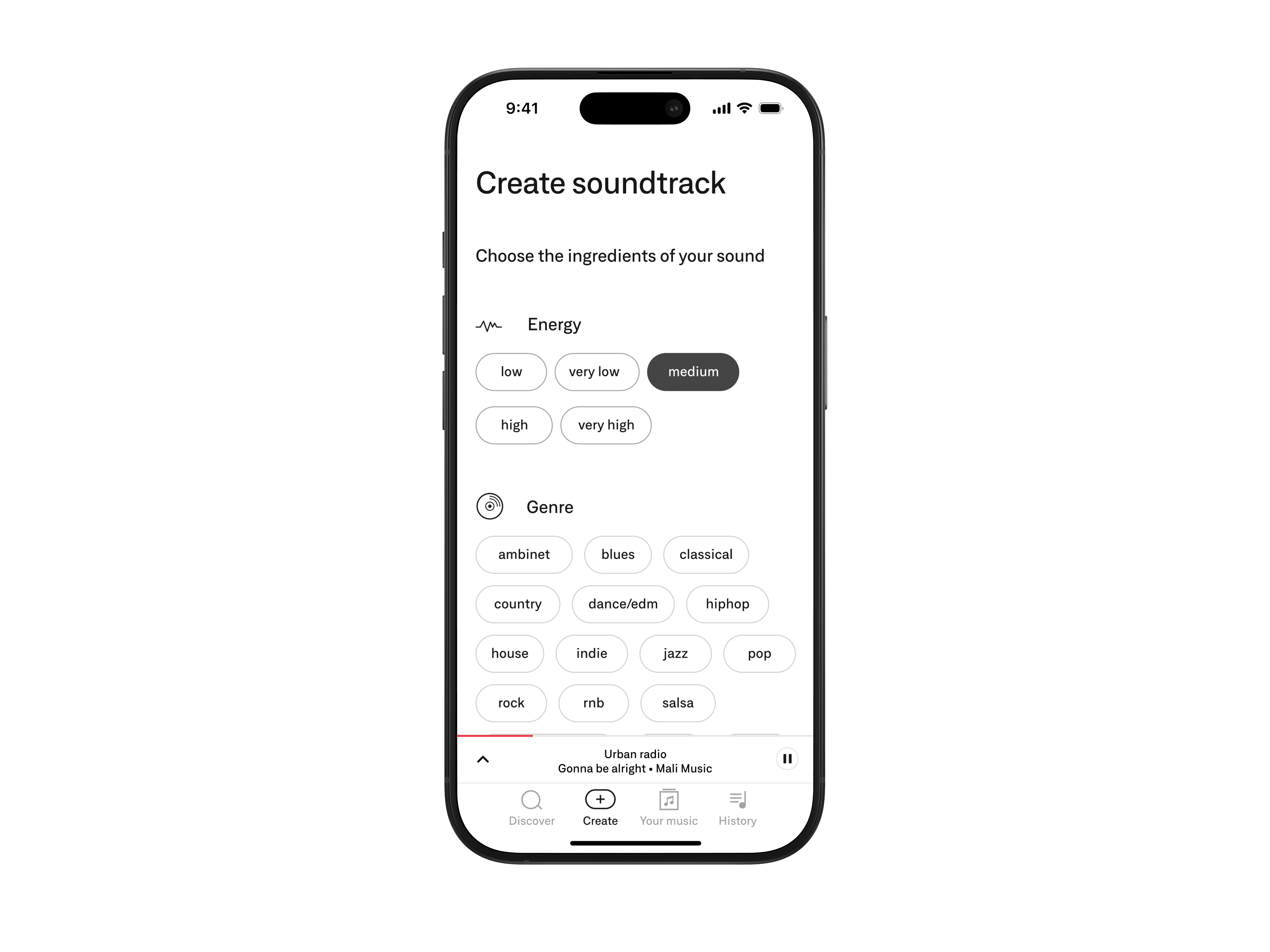
I needed to design mobile apps that worked for two very different needs. Staff needed something fast and obvious they could use in the middle of a shift, while managers needed confidence that the music stayed on brand and fully licensed. The product had to cover discovery, playback and soundtrack creation, use a flexible tagging model for mood and style, and stay reliable in noisy, low connectivity in store environments.
Challenge
I needed to design mobile apps that worked for two very different needs. Staff needed something fast and obvious they could use in the middle of a shift, while managers needed confidence that the music stayed on brand and fully licensed. The product had to cover discovery, playback and soundtrack creation, use a flexible tagging model for mood and style, and stay reliable in noisy, low connectivity in store environments.
Key design tension
Make it simple for staff, without losing manager control or brand safety.
Key design tension
Make it simple for staff, without losing manager control or brand safety.
Approach
I started by anchoring the work in real staff workflows and the two-sided model. Staff need speed and simplicity. Managers need control and brand confidence. I mapped journeys and edge cases, validated core flows through prototypes, and partnered closely with engineering to keep decisions shippable. In parallel I built and evolved a component system so we could scale patterns across screens without redesigning the same UI repeatedly.
Principles
Approach
I started by anchoring the work in real staff workflows and the two-sided model. Staff need speed and simplicity. Managers need control and brand confidence. I mapped journeys and edge cases, validated core flows through prototypes, and partnered closely with engineering to keep decisions shippable. In parallel I built and evolved a component system so we could scale patterns across screens without redesigning the same UI repeatedly.
Principles
Key UX decision
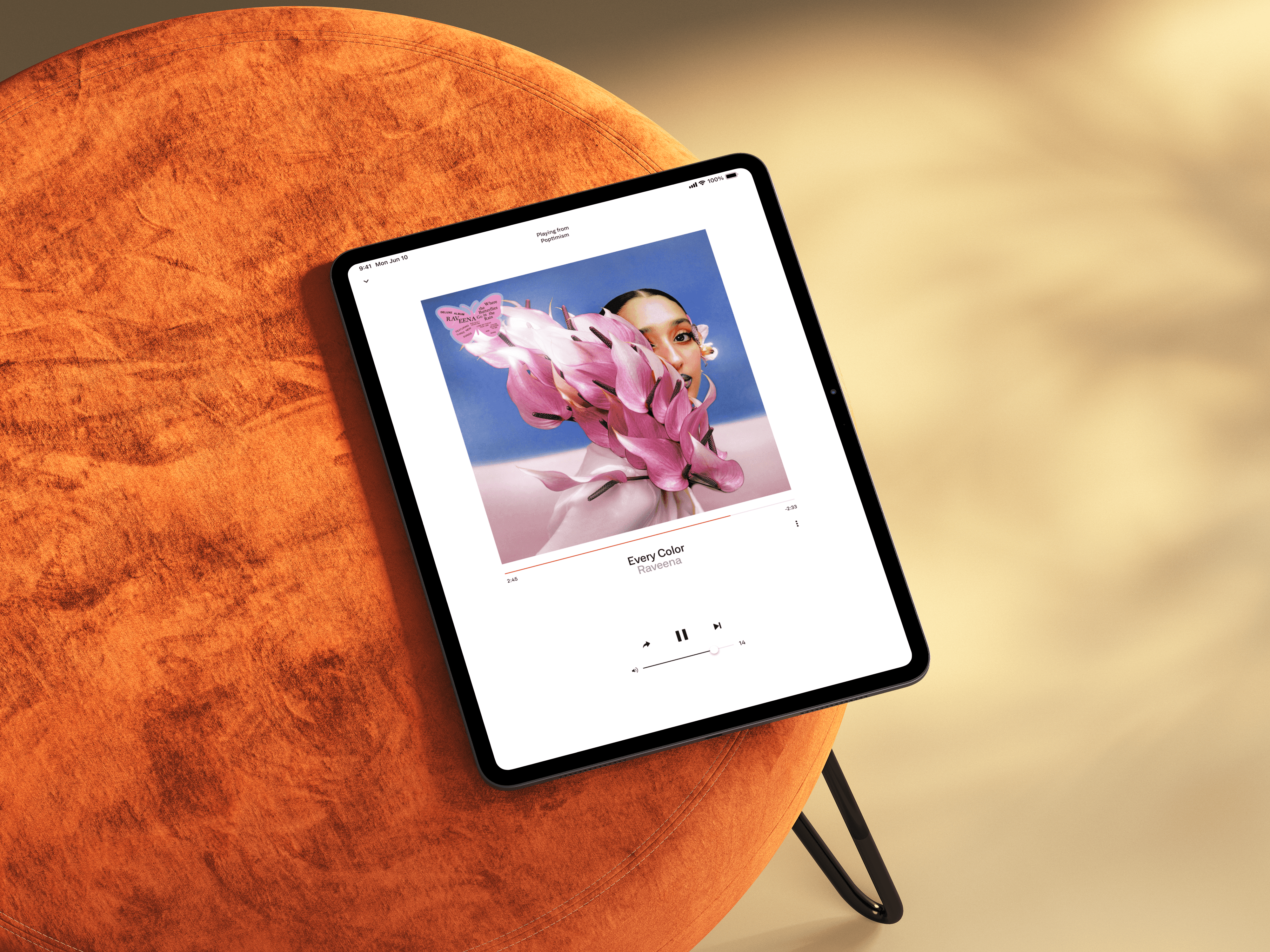
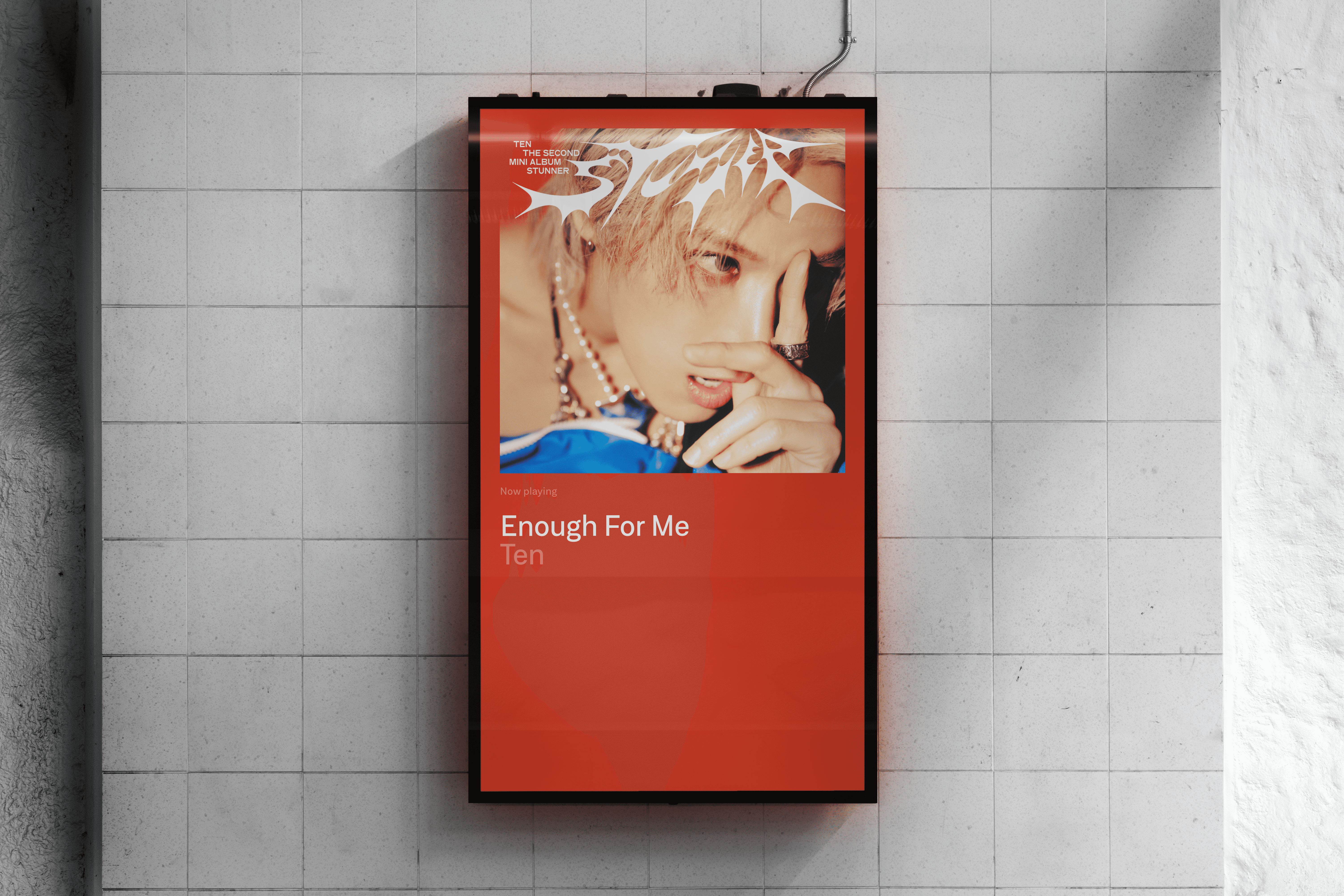
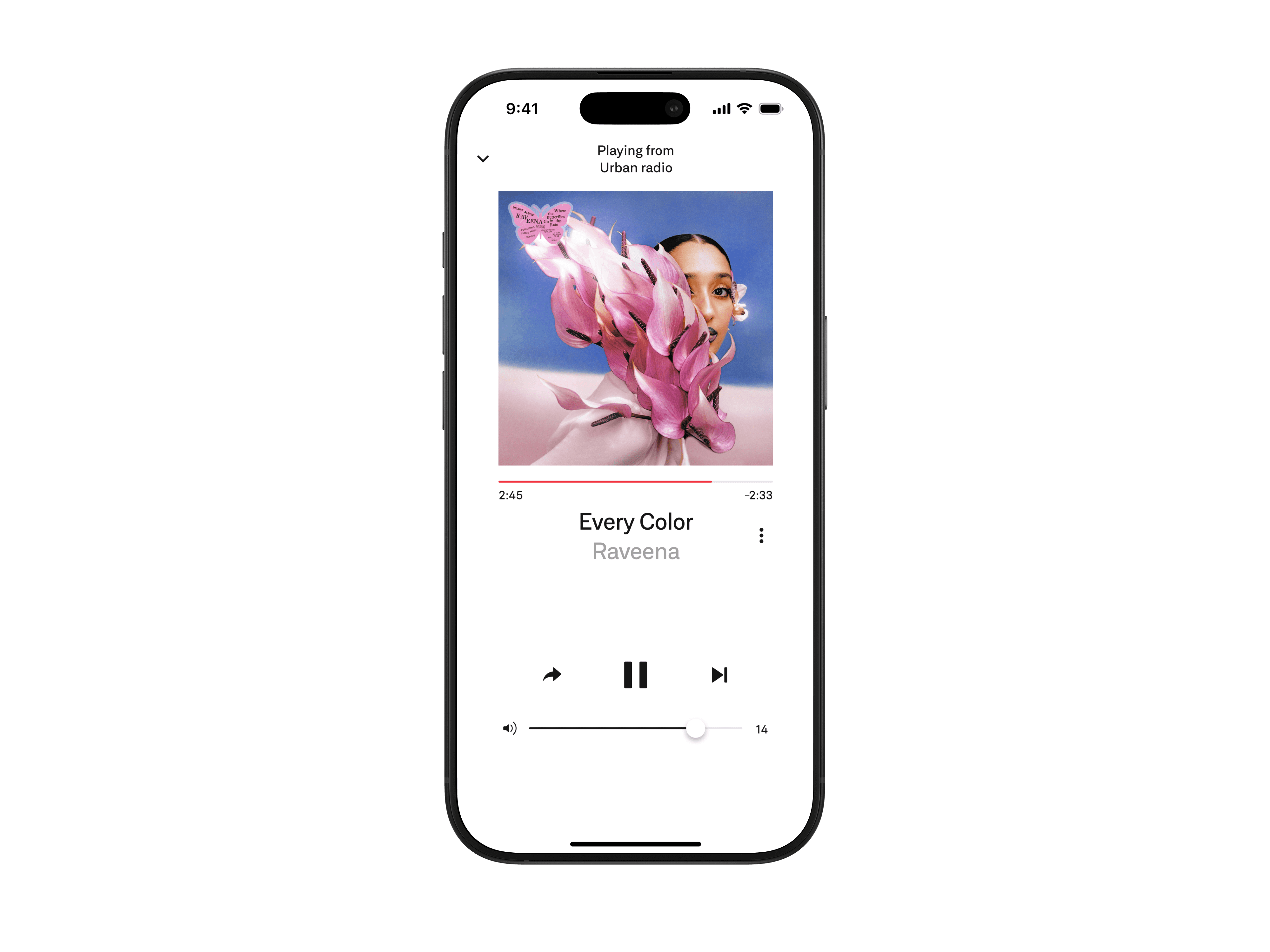
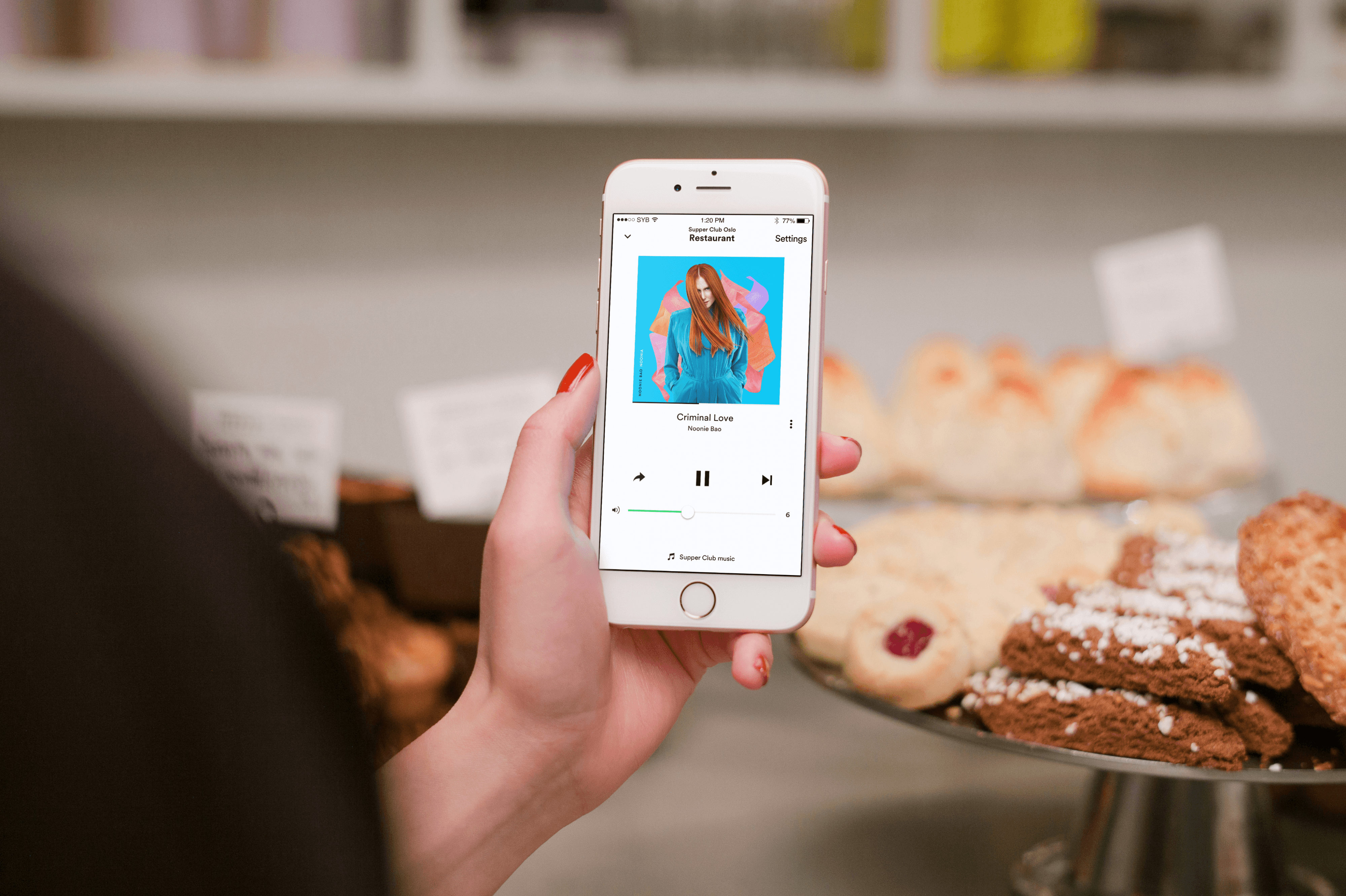
Make Now playing a dedicated screen with big artwork and quick actions for glance use during shifts.
Key UX decision
Make Now playing a dedicated screen with big artwork and quick actions for glance use during shifts.
Solution
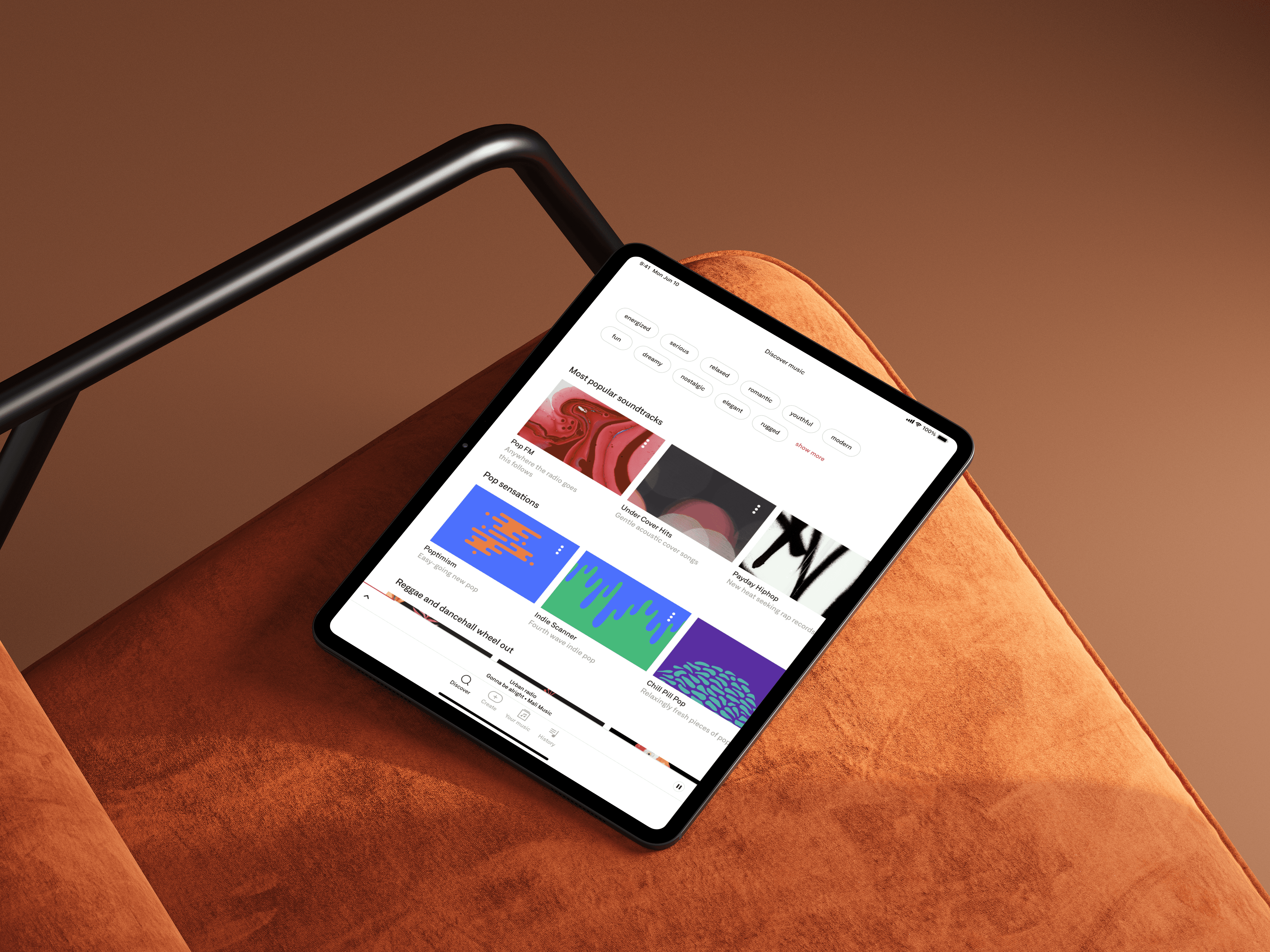
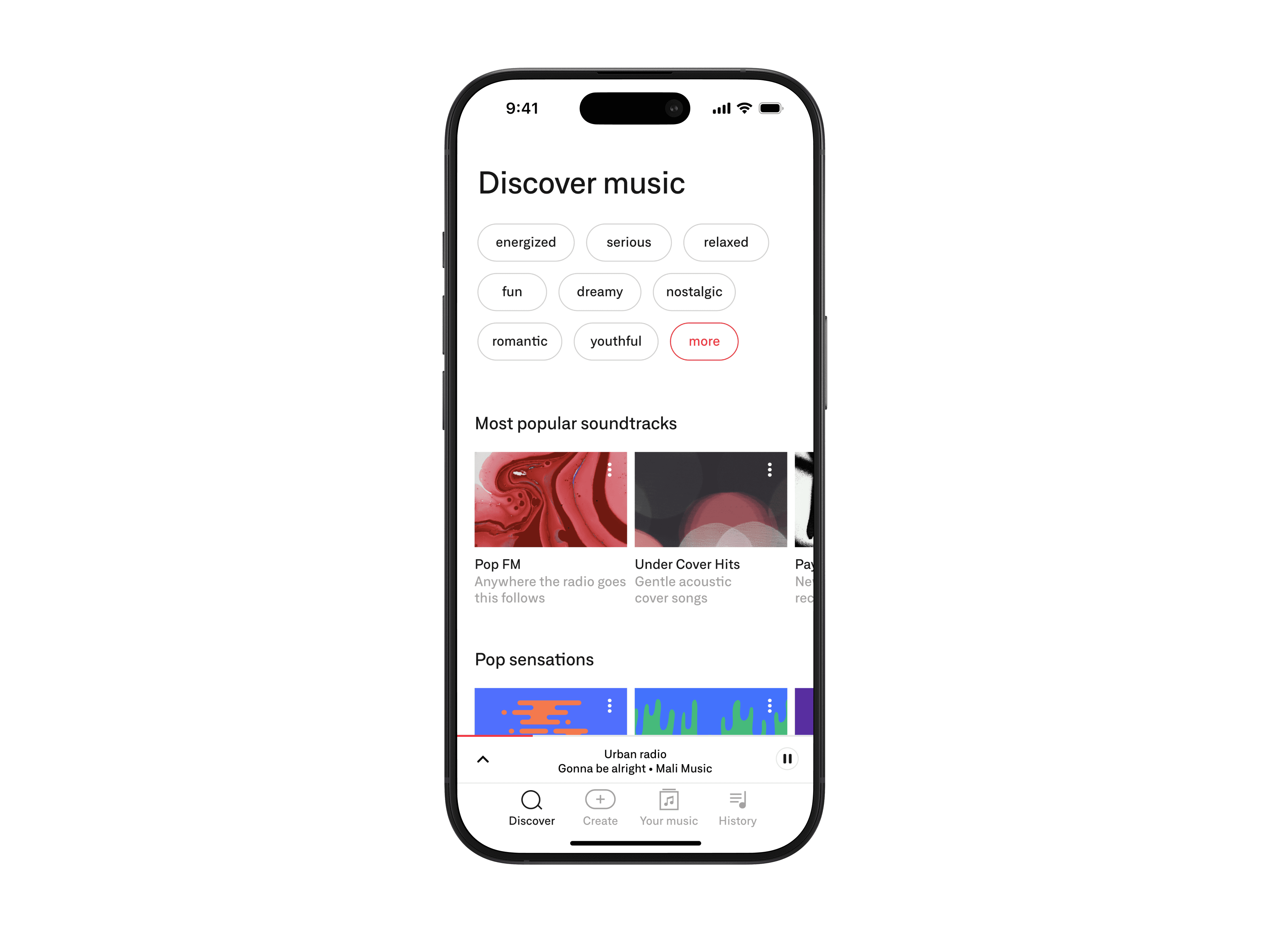
We designed the experience around the moments that matter in a venue. Starting playback, making quick mood adjustments, and creating soundtracks without deep music knowledge. Tag-based controls helped staff move fast, while managers set the guardrails. We also invested in a clear Now playing experience with quick actions so the app worked for glance use during shifts.
A shift-first workflow
We designed for opening, peak hours, and closing time. Fast decisions and predictable actions over browsing.
Now playing as the home base
A dedicated Now playing screen with big artwork, clear context, and quick actions for glance use.
Tag-driven control
Staff adjusted the vibe using simple tags and mood controls instead of digging through playlists.
Manager guardrails
Managers set boundaries. Staff operated confidently inside them during a shift.
Built for real venues
We handled weak connectivity and interruptions so the app stayed dependable in-store.
What changed
Solution
We designed the experience around the moments that matter in a venue. Starting playback, making quick mood adjustments, and creating soundtracks without deep music knowledge. Tag-based controls helped staff move fast, while managers set the guardrails. We also invested in a clear Now playing experience with quick actions so the app worked for glance use during shifts.
A shift-first workflow
We designed for opening, peak hours, and closing time. Fast decisions and predictable actions over browsing.
Now playing as the home base
A dedicated Now playing screen with big artwork, clear context, and quick actions for glance use.
Tag-driven control
Staff adjusted the vibe using simple tags and mood controls instead of digging through playlists.
Manager guardrails
Managers set boundaries. Staff operated confidently inside them during a shift.
Built for real venues
We handled weak connectivity and interruptions so the app stayed dependable in-store.
What changed

Key tradeoff
Speed over depth. Staff needed fast, safe choices more than infinite browsing.
Key tradeoff
Speed over depth. Staff needed fast, safe choices more than infinite browsing.
Impact
The mobile apps became the primary way businesses managed their music, replacing the legacy desktop tool for most day-to-day tasks and supporting Soundtrack’s growth into a leading B2B streaming service trusted by global brands. This project showed that B2B products can reach consumer-grade quality while still meeting professional demands.
Hard proof
Impact
The mobile apps became the primary way businesses managed their music, replacing the legacy desktop tool for most day-to-day tasks and supporting Soundtrack’s growth into a leading B2B streaming service trusted by global brands. This project showed that B2B products can reach consumer-grade quality while still meeting professional demands.
Hard proof
Reflection
This project reinforced that the best B2B UX comes from respecting real environments. Noise, time pressure, low connectivity, and mixed levels of confidence. The product only worked when we made the right things fast and the risky things hard. It also sharpened how I build systems that scale. Reusable patterns, clear guardrails, and design decisions that hold up across markets and brands.
Reflection
This project reinforced that the best B2B UX comes from respecting real environments. Noise, time pressure, low connectivity, and mixed levels of confidence. The product only worked when we made the right things fast and the risky things hard. It also sharpened how I build systems that scale. Reusable patterns, clear guardrails, and design decisions that hold up across markets and brands.
Explore more
D-ID AI concept
2024
Spotify 2.0 for Tesla
2023
Telia Play
2021
Spotify Business 2.0
2016
Explore more
D-ID AI concept
2024
Spotify 2.0 for Tesla
2023
Telia Play
2021
Spotify Business 2.0
2016

Independent Principal Product Designer based in Stockholm, working worldwide. Designing future digital experiences.
© 2026
arnetz.design
Independent Principal Product Designer based in Stockholm, working worldwide. Designing future digital experiences.
© 2026
arnetz.design